

Sleeping and waking up is a natural physiological function that we usually don't think about, just as we don't think about breathing. However, the hectic pace and increasing obligations of modern lifestyles seem to be affecting the quantity and quality of sleep. As a result, sleep hours are decreasing worldwide and regulating them is becoming increasingly difficult. Therefore, the question that arises is how can sleep be regulated? To answer this we will analyse some key issues such as schedule, diet and exercise.
Why do we need the sleep schedule?;
The regulation of various homeostatic functions in our body is controlled by circadian clocks. These intrinsic clocks are also responsible for the cycle of sleep and wakefulness that lasts for about 24 hours. The body's circadian rhythm has a direct effect on simple daily behaviors such as food and drink intake, but also on physiological functions such as hormone secretion, body temperature and more.
Although it is often considered difficult to consistently schedule sleep due to various external factors, a regular sleep schedule is very important. Consistent wake-up and bedtimes not only help maintain the body's biological clock, but also reduce daytime sleepiness, facilitate sleep onset and early awakening, and contribute to mental health and regulation of the reproductive and endocrine systems.
If you are concerned about your sleep regulation and are experiencing a discount in your daily routine, contact one of myTherapist's certified psychologists today.
The importance of a good diet for a refreshing sleep

It is widely accepted that a proper diet includes the intake of all the ingredients necessary for good physical health and well-being. However, nutrition is not only about being alert in one's daily activities, but also about being awake. A good diet needs a balance of proteins, carbohydrates and fats. Reduced protein intake, as well as low-fibre and higher-processed carbohydrates have been found to affect sleep quality. In addition, the consumption of foods and drinks with a high glycaemic index, irregular distribution of meals throughout the day, and excessive calorie intake are serious contributors to insomnia. Eating foods rich in vitamins, melatonin, serotonin and especially tryptophan increase the overall time and quality of sleep. More specifically, tryptophan found in foods such as chicken, tuna, turkey, beans, etc. contributes to longer sleep duration.
The importance of physical exercise
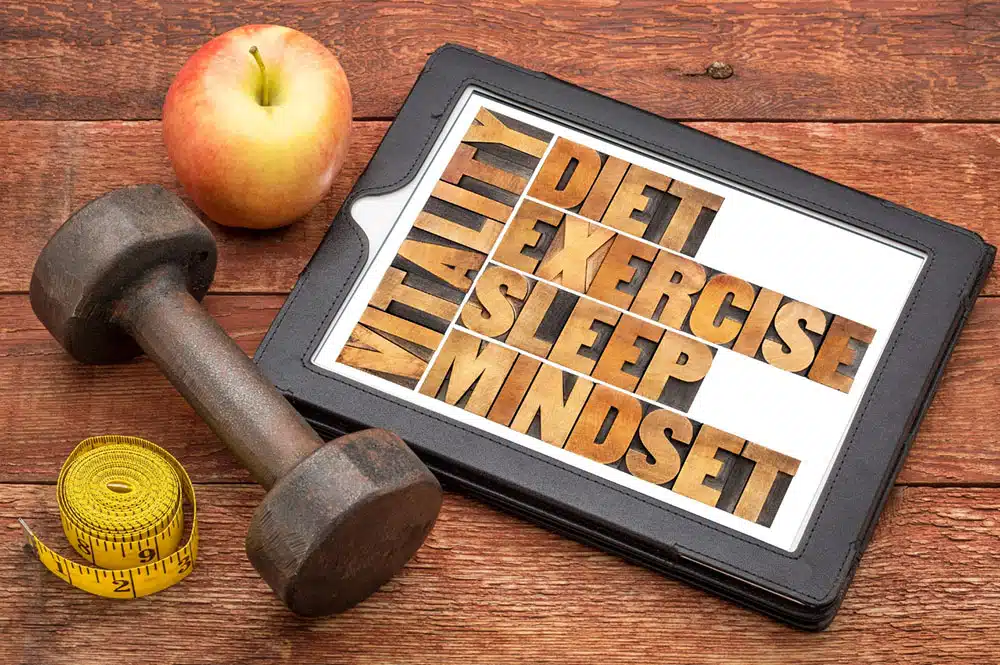
Physical activity is an element of public mental and physical health. It contributes to the prevention and treatment of diseases. Although it is not clear how exercise contributes to sleep quality, it appears that people who exercise have deeper and better quality sleep, as do people with primary insomnia. Both mild and vigorous physical activity contribute to sleep quality. More specifically, mild aerobic exercise of half an hour improves same-day sleep. Many researchers recommend that exercise should take place earlier in the day, as exercise in the evening hours can disrupt sleep. However, there are many advocates of the opposite view, but it is conservatively recommended that vigorous exercise in the evening hours should be avoided. Finally, sleep and physical exercise are interrelated, as physical exercise contributes to an overall healthier sleep and conversely, sleep helps the body's muscle recovery and recuperation.
Myths about sleep: alcohol, caffeine and longer sleep duration
Alcohol and caffeine
Many adults often associate alcohol consumption with relaxation and thus the onset of sleep. However, alcohol not only does not help with sleep, but is a potential risk factor for insomnia, as it interferes with the biorhythms of normal sleep. Furthermore, studies note that it reduces the REM phase, which develops in the second half of sleep. It is therefore necessary to separate the concept of sleep deprivation from restorative, quality sleep. Also, while caffeine contributes to wakefulness during the day, its repeated and increasing intake gradually reduces the overall duration of sleep.
The longest sleep duration and the daily «nap»
A full sleep is about 7-9 hours. Both less and more sleep are associated with health risks. More sleep is only indicated for young adults or people suffering from a disease. Accordingly, the beneficialness of midday sleep is related to its duration. A noon nap of about half an hour is considered suitable, as if there is a deep noon nap, the person may be sluggish and disoriented after waking up. In fact, in the case of insomnia, it is recommended that daytime «naps» should be avoided.
When should I contact a specialist?;
In any case, each person's sleep is unique and personal. Beyond that, it is a key health issue, as it relates to all aspects of daily life. Of course, quite often sleep does not improve despite the steps taken to regulate it. Therefore, because sleep is also affected by psychological factors and is directly linked to mental health, one needs to look at what is happening in a more individualised way.
If you feel that you are unable to regulate your sleep and that the discomfort persists, contact one of myTherapist's certified psychologists today.
Bibliography
- Al-Khani, A. M., Sarhandi, M. I., Zaghloul, M. S., Ewid, M., & Saquib, N. (2019). A cross-sectional survey on sleep quality, mental health, and academic performance among medical students in Saudi Arabia. BMC research notes, 12(1), 665. https://doi.org/10.1186/s13104-019-4713-2
- American Psychiatric Association (2022). sleep-wake disorders. in Diagnostic and statistical manual of mental disorders (5th ed., text rev.).
- Barbato G. (2021).REM Sleep: an unknown indicator of sleep quality.International journal of environmental research and public health, 18(24), 12976. https://doi.org/10.3390/ijerph182412976
- Nelson, K. L., Davis, J. E., & Corbett, C. F. (2022). sleep quality: an evolutionary concept analysis. nursing forum, 57(1), 144-151. https://doi.org/10.1111/nuf.12659
- Sejbuk M, Mirończuk-Chodakowska I, Witkowska AM. Sleep Quality: a Narrative Review on Nutrition, Stimulants, and Physical Activity as Important Factors. nutrients. 2022; 14(9):1912. https://doi.org/10.3390/nu14091912
About