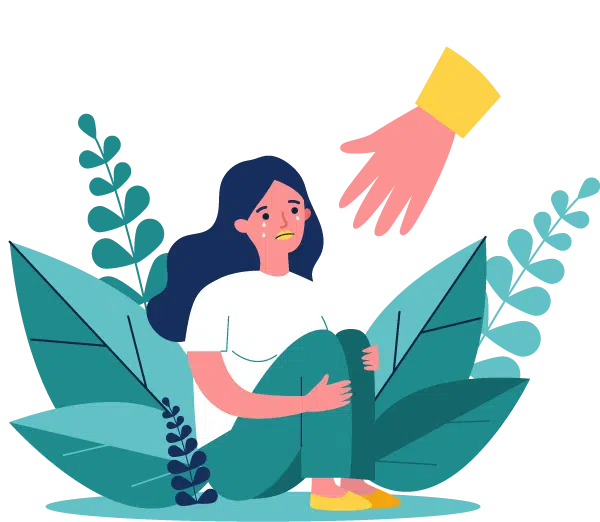

Have you ever caught yourself saying “yes” while inside you want to shout “no”? Do you constantly try not to disappoint anyone, even if that means putting your own needs second? If you feel like you always have to be “okay” with everyone, then you may be experiencing good child syndrome, a behavioral pattern that often starts in childhood and follows many people into adult life.
What good child syndrome is and how it begins
Good child syndrome describes a tendency to try excessively to please others, avoid conflict, and seek acceptance by keeping the people around you happy. This person often learns, usually from a young age, that love and acceptance depend on being “good,” obedient, and polite. Deep down, there is a deep-seated need to satisfy others, even at the expense of your own needs. Behind this stance there is often an inner fear of rejection, guilt, or losing love. It is a set of behaviors and ways of thinking marked by excessive compliance, self-sacrifice, and an internal need for approval. People with this pattern often:
- Says “yes” when they want to say “no.”
- Takes on more responsibilities than they can handle.
- Feels guilty when setting boundaries.
- Avoids conflict so as not to upset others.🤫
The root of this behavior is usually found in early experiences where the child learned that acceptance and love are earned through obedience, caring for others, and having no objections.
The cognitive dimension, how our thoughts shape behavior
Cognitive behavioral theory suggests that our feelings and actions are influenced by how we interpret situations, not by the situations themselves. People with good child syndrome often have automatic thoughts such as:
- “If I say no, they will reject me.” 💔
- “Other people’s needs are more important than mine.”
- “My worth depends on how much people love me.” 😞
- “I must not upset others.”
These cognitive distortions create a vicious cycle. The more someone tries to please others, the stronger the illusion becomes that their value depends on others’ approval. Over time, personal identity can begin to “disappear” inside other people’s needs.
If you feel like you live to satisfy others, it may be time to put yourself on the list too. Take the first step toward a more balanced and freer life.
The roots of the “good child” in childhood 👶
The cognitive approach recognizes that these beliefs are formed through early cognitive schemas. Some of the most common are:
- Heightened responsibility schema:“I am responsible for other people’s feelings.”
- Subjugation schema:“If I express my needs, others will get angry or reject me.”
- Approval through achievement schema:“My worth depends on being correct and good.”
These schemas develop in childhood environments where love was tied to obedience, or where the child’s needs were neglected. As a result, the adult learns to “anticipate” others’ needs, over-adapt, and avoid any possibility of rejection.
The consequences of good child syndrome
While kindness and empathy are positive traits, good child syndrome can lead to:
- Chronic anxiety and guilt 😟
- Emotional exhaustion and burnout 🔥
- Suppressed anger that shows up indirectly or later
- Difficulty in authentic relationships 🤝
- Low self-esteem and difficulty making decisions 🪞
These consequences further strengthen the cognitive pattern. The more exhausted someone feels, the more they try to “fix” things by trying harder and being even more accommodating, until they lose touch with themselves and function almost automatically just to keep the “peace” around them.
How cognitive therapy helps you break the cycle
Cognitive behavioral therapy (CBT) is one of the most effective approaches for addressing good child syndrome. It helps you learn to:
- Recognize the automatic thoughts that push you to say “yes.”
- Question their validity (“Is it certain they will reject me?”).
- Develop alternative, more realistic beliefs.
- Experiment with new behaviors, starting with small “no’s.”
Change happens gradually as you begin to see that your worth does not depend on others’ acceptance, but on your own self-acceptance .
Practical cognitive strategies for everyday strengthening

- Practice self-observation
Write down moments when you say “yes” even though you do not truly want to. What led you to that decision? What thought came first? - Reframing thoughts
Whenever a guilt-based thought appears (“If I refuse, I will hurt them”), try turning it into a more realistic version: “If I refuse, they may be disappointed for a while, but that does not mean they don’t value me.” - Start with simple situations where you can express a different opinion or set a boundary calmly. Each success strengthens the new belief that your worth does not depend on others’ approval. 💪
- Developing self-compassion
Instead of criticizing yourself for moments you “give in,” recognize that this is an old pattern that takes time to change. Self-compassion is a foundational tool in cognitive restructuring. ❤️
If you struggle to set boundaries or feel guilty when you say “no,” start online psychotherapy today and learn to care for yourself with respect and confidence.
How to recognize progress
Change does not happen overnight. Still, you can tell you are moving forward when:
- You start saying “no” without excessive guilt.
- You feel comfortable expressing disagreement.
- You realize people value you for who you are, not for how accommodating you are.
- You replace “I have to” with “I choose to.”
Each such moment is proof that your thinking is changing and that good child syndrome is easing.
The “good child” becoming authentic
Cognitive therapy does not aim to “erase” the good child within us, but to free them from dysfunctional beliefs. You do not need to stop being kind, supportive, or compassionate. The change is learning that kindness does not mean submission and that love does not require self-sacrifice.
By learning to recognize automatic thoughts, work through them, and act consciously, you can transform good child syndrome into healthy empathy and balance. The goal is not to stop being good, but to learn to be good to yourself as well.
Kindness without boundaries becomes a burden, while kindness with self-awareness becomes strength. Through cognitive change, you can learn to:
- Express your needs without guilt.
- Set boundaries with respect.
- Live relationships with more honesty and balance. 🧘♀️
✨ And that is how the “good child” becomes an authentic adult who loves without losing themselves.
You do not have to face it alone. The specialists on our platform are here to help you let go of good child syndrome and live more freely.
Being a “good child” is not weakness. It is often a defense that once protected you. Today, though, you can turn it into strength through awareness, cognitive restructuring, and self-acceptance. True kindness begins when you no longer need to prove your worth.
Bibliography
- Horney, K. (1950). Neurosis and Human Growth. Norton.
- Rogers, C. (1961). On Becoming a Person. Houghton Mifflin.
- Journal of Personality (2018). “People-pleasing and emotional exhaustion: Links between self-worth and external validation.”
- University of Athens (2020). Study on emotional expression and social acceptance in Greece.
- American Psychological Association (2023). “The mental toll of people-pleasing: Understanding self-worth dependency.”
Related articles