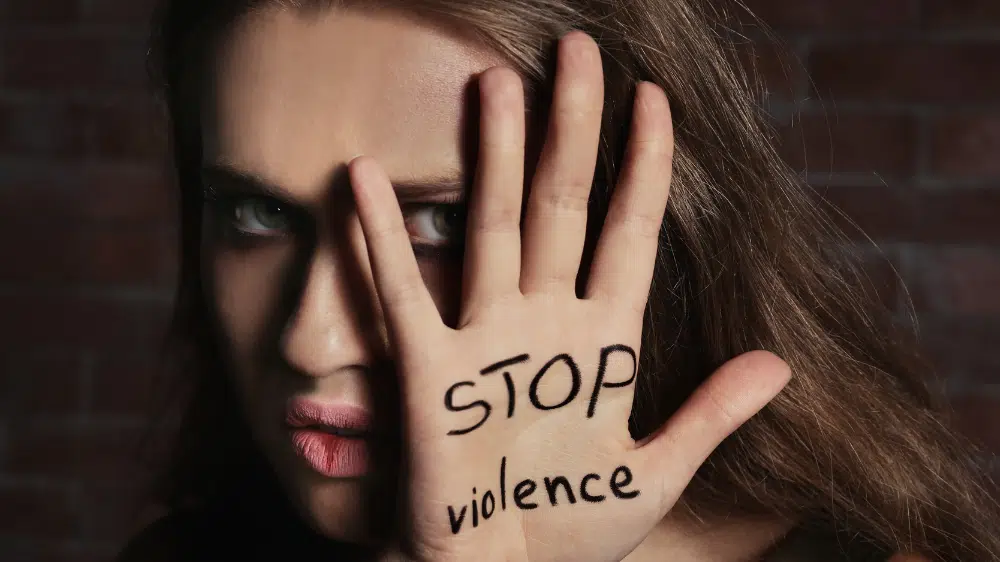
“When silence hurts more than a voice”
“Inside every home there may be silence, fear, and pain. Every woman living with violence or abuse deserves to be heard, protected, and supported to regain her strength. This article is for those searching for a voice, for those who want to believe in hope again.” Every November 25, the world turns its attention to a wound that remains open: violence against women. Behind statistics and numbers are shattered lives, souls struggling to find balance again, and voices learning to break the silence. This day is not just a reminder; it is a call for action, healing, and empowerment.
🔶 The meaning of the day, a global call
The International Day for the Elimination of Violence against Women was established by the United Nations in 1999, in honor of the Mirabal Sisters, three women who were murdered in the Dominican Republic because of their political activism. Since then, this date has become a point of reference for awareness, education, and mobilization against every form of gender-based violence. According to the World Health Organization (WHO, 2021), one in three women worldwide has experienced physical or sexual violence, usually by an intimate partner. The consequences are not limited to the body; they leave deep psychological scars that can last a lifetime.
💔 From silence to trauma and psychological injury
Violence in any form, physical, psychological, verbal, sexual, or economic, erodes a woman’s sense of safety and self-worth. It creates instability and often reduces everyday functioning. Women who experience it may feel intense fear, shame, and guilt. These feelings often lead to silence, a “frozen” psychological state where survival outweighs voice.
Repeated exposure to violence activates the trauma response:
- The brain remains in constant alert.
- The body reacts with anxiety, insomnia, panic attacks,
- A person may emotionally disconnect to endure the pain.
- This emotional disconnection is often the first step toward post-traumatic stress disorder (PTSD).
🧠 The psychological consequences of violence
The impact of violence is complex and long-lasting. It extends beyond a temporary emotional upheaval, resulting in a deep shift in how a woman understands herself and the world.
Common psychological consequences include:
- Post-traumatic stress disorder (PTSD)
Nightmares, flashbacks, intense anxiety, avoidance of situations or people. - Depression and hopelessness
Loss of interest, low self-esteem, thoughts of self-harm. - Anxiety disorders
Hypervigilance, panic attacks, social withdrawal. - Sleep Disorders and eating disturbances
- Guilt and self-blame: Many women internalize the experience of violence, feeling that they themselves are responsible for what happened.
- Relationship difficulties - mistrust, suspiciousness, fear of re-traumatization, difficulties with sexuality.
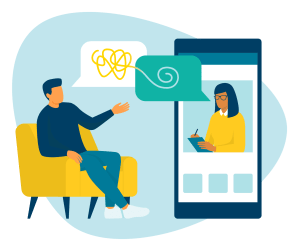
If you are experiencing or have experienced violence: speak up. You are not alone. Silence keeps fear alive. 👉 Start online therapy with one of our highly specialized therapists.
🌱 The healing process, from trauma to resilience
Healing psychological trauma takes time, support, and safety. Psychotherapy is a central part of recovery, because it helps a woman:
- Acknowledge the trauma without guilt.
- Reconnect with her body and emotions.
- Rebuild her self-image, remembering she is not defined by the violence she endured.
- Develop resilience and regain control of her life.
Through approaches such as Cognitive Behavioral Therapy (CBT), EMDR and trauma-focused therapy, a woman can gradually release the emotional charge of painful memories and rebuild trust in herself and others.
💬 The strength of community, from loneliness to empowerment
Recovery from violence is not only an individual matter. When one woman speaks, she inspires others to do the same. Society needs to break the cycle of complicity, where silence, tolerance, and prejudice normalize violence.
Education, prevention, and information are the strongest tools for change. Respect, consent, and equality must be nurtured through school, family, and the media. Every person has a role in this collective effort.
🧩 The role of mental health in prevention
Prevention is not only legal or social; it is also psychological. By learning to recognize the signs of violence, such as isolation, control, manipulation, and threats, we can act earlier.
Building emotional intelligence, self-esteem, and healthy relationships is crucial. The more we invest in young people’s emotional education, the more we reduce the ground where violence grows.
📢 Awareness Campaigns - The voice that changes societies
“Information saves lives”
"Real change begins before the pain becomes unbearable"
Violence against women is not inevitable. It is shaped by social, cultural, and psychological factors that can be transformed through prevention, education, and early intervention. Prevention is not only about protecting victims; it is about creating a society that does not produce perpetrators. Campaigns do not simply change opinions; they change mindsets.
When a woman sees a message on TV, in the metro, or on social media that says, “It’s not your fault. Violence is not love,” she begins to recognize abuse and seek help. The power of imagery, storytelling, and collective voice is immense. Awareness builds empathy and social responsibility; it strengthens the understanding that violence is not a “private matter,” but a social problem.
Awareness campaigns are not just communication actions; they are mechanisms of social change. When society becomes informed and sensitized, conditions are created to reduce tolerance of violence, empower victims, and change public discourse about women’s place in society.
Every year, the International Day for the Elimination of Violence against Women (November 25) becomes a starting point for campaigns focused on information, prevention, and mobilization. These include organizations such as the UN, UN Women, the General Secretariat for Gender Equality, NGOs, and citizen communities.
🔶 Goals of awareness campaigns:
- Break taboos and silence around violence and sexual harassment.
- Inform people about rights, support services, and ways to report incidents.
- Inspire action at institutional, educational, and social levels.
- Redefine responsibility: the burden lies not with the victim, but with the perpetrator and the system that tolerates him.
Break the silence. You do not have to face difficulties alone. Take the first step today and start therapy. Your mental health deserves care.
⚠️ Sexual harassment, the “invisible” face of violence
- 55 percent of women in the EU have experienced some form of sexual harassment.
- In Greece, the percentage reaches 49 percent, while only a small portion is reported.
- Unwanted comments or insinuations about appearance.
- Sexist “jokes” or gestures.
- Touching without consent.
- Threats or blackmail in exchange for favorable treatment (for example, in the workplace).
- Cyber harassment through messages, photos, or social media.
- Anxiety and panic attacks,
- Shame and isolation
- Loss of trust
- Professional downgrading or leaving a job
🏠 Domestic violence and abuse of women
“When home stops being safe”
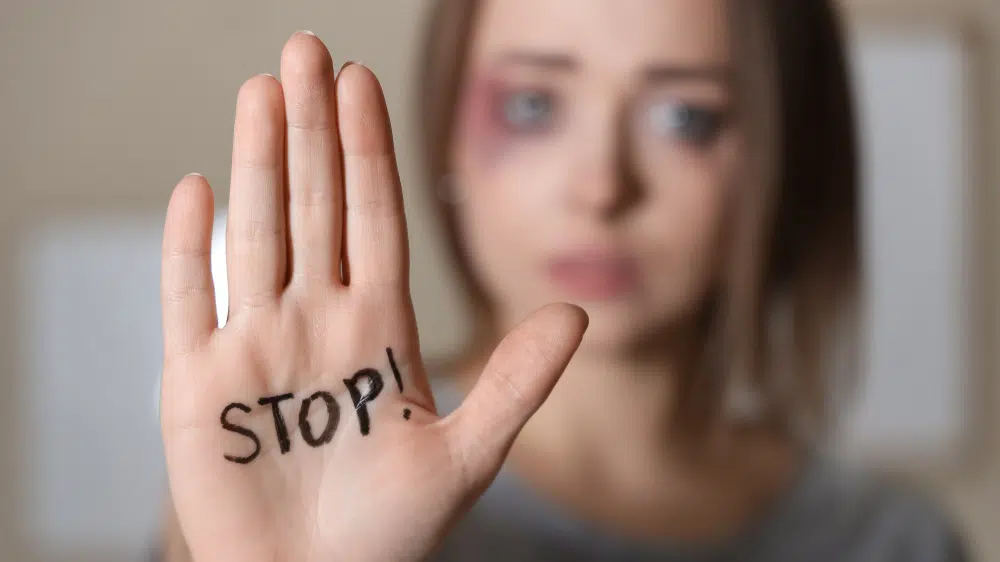
Domestic violence is one of the most painful and widespread forms of gender-based abuse. It is repeated, systematic violence occurring within a family or intimate relationship, usually from a man toward a woman, but also toward children or older adults. Behind closed doors, silence, fear, and psychological trauma are born, and they can be difficult to heal.
According to the World Health Organization (WHO, 2021), one in three women worldwide has experienced physical or sexual violence by an intimate partner. In Greece, according to the General Secretariat for Gender Equality (2023), more than 6,000 reports each year concern domestic violence incidents, a number that continues to rise as more women break their silence.
💢 Forms of domestic violence
- Physical violence: hitting, threats, physical coercion.
- Psychological violence: humiliation, threats, insults, isolation from friends or family.
- Sexual abuse: acts without consent or under pressure.
- Economic violence: deprivation of financial resources, control of income, forced dependence on the perpetrator.
- Social violence: isolation, forbidding social contact or work.
Take the first step toward your psychological recovery. Book your appointment today from the comfort of your own space.
🚪 The cycle of abuse
Domestic violence often follows a repeating cycle:
- Tension-building phase: small conflicts, threats, increasing tension.
- Violent incident: physical or psychological attack.
- Remorse and “honeymoon” phase: the perpetrator apologizes, promises change.
- Repetition: the cycle starts again, often with greater intensity.
👥 Groups of women at increased risk and vulnerability
- Unemployed or financially dependent women: financial dependence increases the likelihood of staying in abusive relationships.
- Older women (for example, over 60) with limited resources or social isolation.
- Women with low education and or migrant or foreign backgrounds who may face multiple vulnerabilities (language barriers, limited support).
- Women experiencing psychological or emotional abuse, as these forms are often “invisible” and underreported.
- Pregnant women or women with small children, especially with factors such as an unwanted pregnancy, a large age gap with a partner, or financial dependence.
🧩 Why do women stay?
Many people wonder why a woman doesn’t “just leave.” The answer lies in psychological and social entrapment. Reasons can include:
- Fear for her life or her children’s lives
- Financial dependence
- Social stigma
- Lack of support
- Guilt or hope that the perpetrator “will change”
If you or a woman you know is experiencing violence or abuse, there is immediate help:
Call SOS line of your Country - for gender-based and domestic violence support.
Conclusion
Violence against women leaves deep scars, but we must remember it does not define their entire lives. Their value is not diminished every time they suffer or endure harmful situations. Every woman who finds the courage to speak, seek help, and care for her mental health discovers her strength again. Psychotherapy, support from loved ones, and participation in awareness campaigns can transform trauma into personal resilience and self-worth. November 25 is not only a day of remembrance; it is a day of commitment. A commitment to all women who have suffered, and to those still fighting to be free.
“When a woman breaks her silence, she frees a thousand others.”
Every voice that breaks the silence becomes light for someone else. Every small step toward healing is a victory. Change is possible. Life can become full of safety, joy, and self-respect again. Open the door to the life you deserve.
📚Bibliography
- World Health Organization (2021). Violence against women prevalence estimates, 2018.
- Lenore Walker (1979). The Battered Woman. Harper & Row.
- United Nations Women (2022). Domestic Violence: Global perspectives and prevention.
- General Secretariat for Gender Equality (2023). Gender-Based Violence in Greece, Annual Report.
- Herman, J. L. (2015). Trauma and Recovery. Basic Books.
- Hellenic Police, Directorate for Domestic Violence (2024). Statistics and Intervention Guide.
Related articles