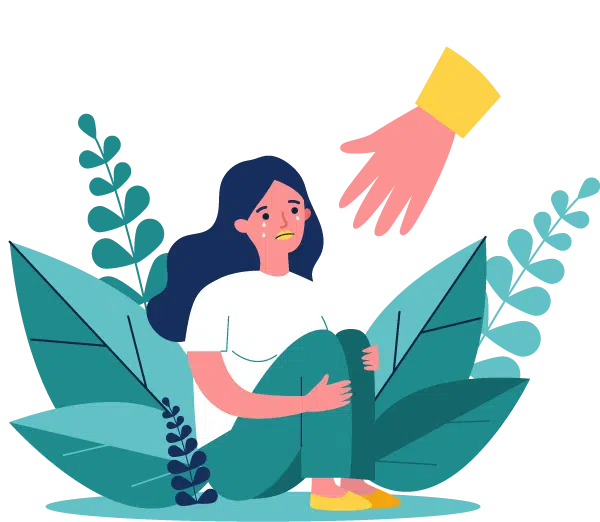

What is a toxic relationship, really?
The term “toxic relationship” is used to describe a bond in which conflict, negative emotions, lack of respect, manipulation, or even abuse. It doesn’t necessarily mean that every problem makes a relationship “toxic.” However, when a relationship drains more energy than it gives, the boundaries of healthy love are crossed. A toxic relationship is not defined only by arguments or difficulties. Every relationship has disagreements. What sets it apart is that toxicity becomes a stable pattern. In a healthy relationship, conflict can lead to solutions and growth. In a toxic one, conflict wears down self-esteem, fuels doubt, and creates an atmosphere of fear, guilt, and dead ends. A toxic person erodes the quality of an interpersonal relationship, corrodes a person’s inner world, and poisons hope for life. Toxicity is not always obvious; often, problems escalate gradually and the relationship can feel “normal” at first. Toxic relationships are sometimes described as “sadomasochistic” and “living-dead” relationships, in which dependence forms over time and a deep emotional void develops.
Emotional signs of a toxic relationship
In a toxic relationship, the emotional impact is often more intense than the practical or social difficulties. Emotional signs can be the hardest to notice, because we can become accustomed to a painful pattern and begin to see it as “normal.”
- Emotional depletion:: You feel constantly tired, emotionally empty, or as if you’re “running just to keep the relationship standing.”
- A sense of insecurity: You doubt your decisions, your behavior, or your worth.
- Guilt and self-blame: You often feel responsible for whatever goes wrong in the relationship.
- Fear of expression: You hesitate to speak about your feelings or needs to avoid disagreements or your partner’s anger.
- Emotional dependence: You feel you cannot be happy without your partner, even if the relationship hurts you.
- Joy suppression: You struggle to enjoy positive moments or feel pleasure within the relationship.
- Constant anxiety or worry: Ongoing worry about how your partner will react or what will happen to the relationship.
Practical and behavioral signs of a toxic relationship
Beyond emotional signs, a toxic relationship often shows practical and behavioral patterns that indicate the relationship is not healthy. These patterns reflect how the relationship affects your everyday life and your decision-making.
1. Constant control
A toxic partner wants to know every detail of your life: who you see, where you go, what you do. This control restricts your freedom and creates tension and anxiety.
2. Belittling or sarcasm, in public and in private
Comments that reduce your value or make you feel ashamed in front of others are common. This damages your self-esteem and pulls you away from your social life.
3. Instability and extreme reactions
Toxic partners may swing from intense affection to rejection, creating emotional instability. Their behavior feels unpredictable and produces a constant sense of fear and uncertainty.
4. Isolation from friends and family
Trying to distance you from your social network is a form of control and dependence. Over time, the support you receive from others diminishes.
5. Ongoing conflict and confrontation
Disagreements in a toxic relationship do not lead to solutions. Instead, they generate anger, bitterness, and emotional exhaustion, and conflict becomes part of daily life.
6. Violation of personal boundaries
When your boundaries are ignored or not respected, you may feel as if you are losing control of your life. Boundary violations can include pressure toward sexual, financial, or emotional submission.
7. Lack of support for everyday needs
In a toxic relationship, your efforts toward personal growth or dealing with difficulties are not supported. A partner may minimize your achievements or block your attempts to move forward in life.
8. Passive-aggressive behavior
Instead of expressing feelings directly, they use silence or sarcasm.
Why do we stay in toxic relationships?

Many people wonder, “Why don’t I leave my toxic relationship?” The answer is not simple. There are many reasons that can lead someone into a toxic relationship and keep them there.
More specifically:
1. Emotional dependence
A toxic relationship often includes moments of affection and attention that act like a “reward,” making it harder to break away. The hope that a partner will change keeps us attached.
When self-esteem is low, a woman or a man may believe they don’t deserve better, or that they are responsible for holding the relationship together. People with low confidence often feel obligated to carry the relationship on their shoulders. Ongoing criticism, however, deepens feelings of inadequacy and guilt.
3. Fear of loneliness
The idea of being alone after years in a relationship can feel frightening and unsafe, even if the relationship is harmful.
4. Financial or practical reasons
Dependence on financial resources, housing, or shared children can make the decision to leave much more difficult.
5. Habit and fear of change
The human mind adapts to patterns, even painful ones. The relationship can become routine. Change may feel more frightening than staying.
6. Emotional or psychological manipulation
In many cases there is gaslighting, guilt, or constant pressure that blurs judgment and leads someone to excuse the other person’s behavior.
7. A sense of responsibility or protection
When children are involved, or when there are other forms of dependence, staying may come from a need to protect others, even at the cost of personal wellbeing.
This whole pattern can create the feeling of being “trapped in a toxic relationship,” as many people describe it.
You don’t have to remain trapped in a toxic relationship. If you recognize yourself in what you’ve read, psychotherapy can give you the tools to set boundaries and make the decisions you need.
Toxic partner: when everyday life becomes a burden

The term “toxic partner” describes a person who, within a relationship, creates more pain, anxiety, and doubt than love, support, and safety. It doesn’t necessarily mean they are a “bad person.” Most often, it is someone who is psychologically dysregulated, carrying their own trauma, insecurities, or dysfunctional patterns that play out in the relationship. Sometimes they have also been on the receiving end of similar behavior, have internalized it, and use it defensively. That does not mean it is healthy or justified.
Types of toxic partners
There are different types of toxic partners, each showing different behaviors:
- Controlling partner: driven by jealousy and restricts your freedom.
- Critical / belittling partner: consistently diminishes your value.
- Narcissistic partner: centers themselves and ignores your needs.
- Passive-aggressive partner: “punishes” with silence and indifference.
- Unreliable / unstable partner: creates insecurity through contradictory behavior.
- Abusive partner: expresses violence verbally, psychologically, or physically.
Characteristics of a toxic partner
- Control and jealousy:wants to know everything about you and every move you make; when they lose control, they feel threatened and restrict your freedom.
- Devaluation:reduces your worth through comments, sarcasm, or criticism.
- Emotional instability:alternates between intense affection and distance or coldness.
- Lack of empathy.struggles to recognize your feelings.
- Blame-shifting:transfers the burden of responsibility onto you and makes you feel responsible for their unhappiness.
- Abusive behaviors:verbal, psychological, or physical violence.
How a toxic partner affects you
A long-term toxic relationship can have significant consequences:
- Emotional exhaustion and anxiety
- Low self-esteem and a sense of inadequacy
- Physical symptoms: headaches, sleep problems, insomnia, digestive issues
- Reduced social contact and isolation και απομόνωση
- Depression or panic attacks
- Weakened mental health
Love should not hurt. If you live with a toxic partner and feel that you are losing your strength, a specialist can support you in rebuilding your confidence. Freedom starts within you.
Can a toxic relationship change?
The truth is that every relationship has its own dynamics and can evolve. However, when we are talking about a toxic relationship, change is never easy or guaranteed.
🔹 When there is hope for change:
- Both partners recognize the problems.
- The toxic partner genuinely wants to change problematic behaviors and takes full responsibility.
- There is willingness for psychotherapy, individual or couples therapy.
- Change is shown through consistent actions, not only words or promises.
🔹 When change is unlikely:
- There is denial or rejection of the problem.
- The behaviors are abusive, verbally, psychologically, or physically.
- The toxic pattern repeats again and again despite efforts.
- There are pronounced personality traits, including narcissistic traits that may reflect a personality disorder.
Often, when people ask, “Can a toxic relationship change?” they are, in reality, hoping their partner will transform. Hope is human, but it needs realism.
- Change requires time, commitment, and consistency.
- One person alone cannot create it; both need to participate. When manipulative patterns are repetitive, change requires daily, small steps over time.
Breaking up with a toxic relationship

Ending a toxic relationship is often the hardest, but also the most necessary, choice to protect your mental health. It is a delicate matter, because first we need to secure our safety before taking that step. To begin:
- Prepare yourself emotionally
A breakup with a toxic partner can bring relief, but also guilt or fear. Mixed emotions are normal.
- Set clear boundaries
- Decide what kind of communication is safe, for example only for practical matters.
- Limit or end contact if communication triggers anxiety or abuse.
- Make a financial and practical plan
In many cases, especially when there is shared life, it is important to:
- Record financial obligations.
- Plan housing or relocation.
- Seek legal support if needed.
- Lean on your support system
Friends, family, and mental health professionals can offer support and safety. Don’t try to face it alone.
- Prepare for emotional reactions
A breakup can bring:
- Anger or bitterness.
- Shame or guilt.
- The urge to reconnect.
These reactions are normal and part of healing.
- Focus on yourself
After the breakup, give time to self-care, personal growth, and activities that nourish you. Your self-esteem and mental health should become a priority.
A toxic relationship can make you question your worth. But you deserve more. We can’t always change another person, but we can change our own path.
Experiential story: Eleni’s story
Eleni, 35, describes her experience:
“For years I felt trapped in a very toxic relationship. At first, I thought everything was normal. I believed I was the problem, that I was doing something wrong. My partner constantly belittled me and pulled me away from long-term friendships and my family. Even so, I believed it was my fault and that I had to do more to ‘save’ our relationship. When I started psychotherapy, I realized I was not responsible for his behavior. I understood that he was constantly trying to control me. With my therapist’s help, I took small steps: I reconnected with friends, set boundaries, and eventually found the strength to leave. Today I feel free again and full of life.”
Conclusion
Love and relationships are considered core sources of joy and safety in our lives. Yet not all relationships have a positive impact. Many people become trapped in a dynamic where love is confused with pain, care with control, and tenderness with criticism. Toxic people exist everywhere, in every area of life. “Sorry” and “thank you” are not part of their vocabulary. They cover their own insecurity in unhealthy ways, exploding into anger and escalating tension and aggression. Toxic relationships are not limited to occasional disagreements; they affect your emotional world profoundly, and there is a risk of real psychological harm. They are marked by patterns that erode self-esteem, create emotional exhaustion, and restrict personal freedom. The signs may be emotional, behavioral, or practical, and recognizing them is the first step toward protecting your mental health. Leaving a toxic relationship is not failure; it is an act of self-respect and strength.
Bibliography
- American Psychological Association (APA). (2022). Toxic Relationships: Signs, Causes, and How to Cope. Retrieved from https://www.apa.org
- Mayo Clinic. (2023). Abusive Relationships: Recognize the Warning Signs. Retrieved from https://www.mayoclinic.org
- National Institute of Mental Health (NIMH). (2022). Mental Health and Relationship Stress. Retrieved from https://www.nimh.nih.gov
- WHO (World Health Organization). (2021). Violence against women prevalence estimates. Retrieved from https://www.who.int
- Johnson, M.P. (2018). A Typology of Domestic Violence: Intimate Terrorism, Violent Resistance, and Situational Couple Violence. Northeastern University Press.
- Wekerle, C., & Wolfe, D.A. (2019). Childhood Emotional Abuse and the Risk for Toxic Adult Relationships. Journal of Interpersonal Violence, 34(10), 2131–2156.
Related articles