
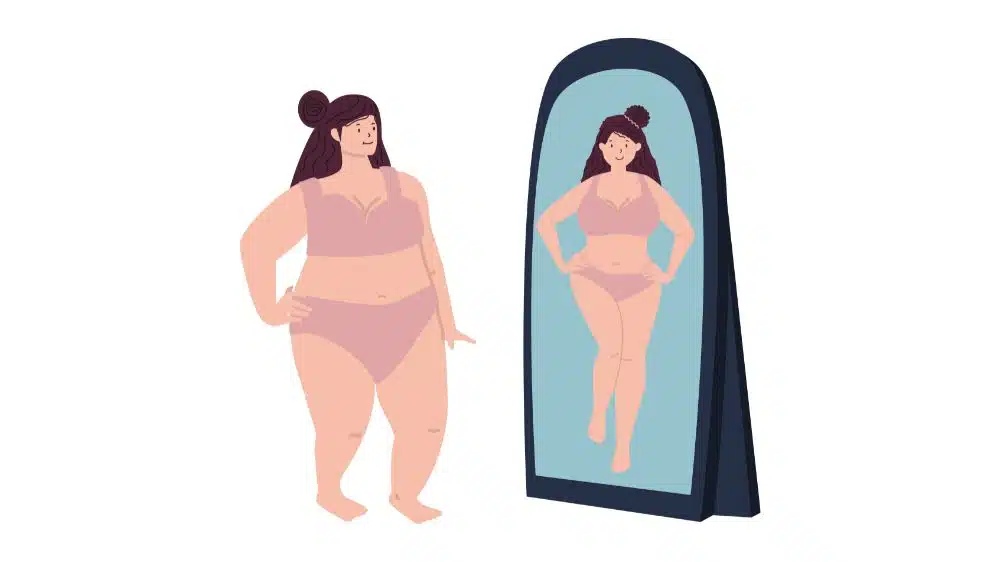
Living in a world where 91% of women are not satisfied with their bodies (Statistic Brain Research Institute), it shouldn’t surprise us that there is a growing shift and focus toward positive body image and acceptance.
How many times have you noticed women who are truly striking - yet have low self-confidence, speak negatively about their bodies, struggle to accept compliments, and feel that they are not, in the end, as impressive as we see them? Could you perhaps recognize yourself somewhere in that description? If yes, here are the things a personal growth coach would want you to know:
A positive self-image starts from the inside, not the outside
No matter what you hear from the people around you, at the end of the day what matters is what you believe about yourself. If you’re influenced by other people’s comments (strangers, friends, or family), take a minute in front of the mirror, look at your body, and ask yourself: “If other people’s opinions didn’t matter at all and only my own did, what would it be?” That’s where you need to start. From within.
You only see what you choose to focus on
Stay a little longer in front of the mirror and observe your reflection more carefully. What is the first thing you notice - your “flaws” or the features you embrace? When you look at how your hair sits, what do you do first: fix it because it’s “not right,” or think something positive? And what about the things you don’t like, do you look at them, or do you avoid them and hide?
Just like in life, when it comes to our self-image and body image, we tend to see what we focus on. If every morning we immediately move into harsh self-criticism about weight, hips, stretch marks, wrinkles, or skin that loosens over time, that’s what we’ll keep seeing for the rest of the day. The more something bothers us, the more we judge it - and the more negatively we judge it, the more we eventually want to stop looking at it so we don’t feel the discomfort. So, the problem is that we don’t concern about our entire personality but just for our bodies.
Accepting my body doesn’t mean I like every part of it
Accepting my body does not necessarily mean I like how I look. Accepting my body means I know my worth regardless of my appearance. It means that feeling better about myself has nothing to do with how I look, but with how I “build” my self-worth independently of my appearance. It means that even if I don’t like my body, face, or hair, I still know my value and I know that I matter.
When we accept ourselves and our bodies, even if we don’t like what we see, it won’t stop us from doing what we want in life. The way we impact the world at work, in our personal life, with our friends and family, does not depend on how we look, but on who we are.
If I don’t get to know and accept myself, I won’t accept my body - and the less I accept, the more obstacles I will place in my path, sabotaging every attempt to feel happy and well.
One of the first steps toward acceptance and positivity: gratitude
What if, every time you wake up, instead of looking at your legs and thinking “they’re so fat,” you think about how grateful you are that they carry you wherever your soul needs to go, allow you to run, and give you the joy of curling up next to your partner every night on the couch under your shared blanket?
What if, every time you smile, instead of thinking “my teeth are ugly” and feeling embarrassed, you think about how grateful you are that your smile makes your loved ones smile, helps a client feel comfortable, maybe helps you earn their trust, or simply gives you a pure feeling of satisfaction and joy, even if it lasts one minute?
What if, for one day, instead of going through the usual mental list of everything we don’t like about ourselves, we created a new list of what we feel grateful for, the day would unfold differently. Give it a try.
Be compassionate. First, toward yourself
How many times have we told ourselves: “What’s wrong with you?”, “You’re ugly,” or “You’re fat”? Could we speak that way to our sister, our mother, or a deeply loved friend? Probably not. So why do we do it to ourselves?
By showing more empathy toward ourselves, with compassion and understanding, we learn to listen to ourselves better. Listening better brings us closer to us; we see ourselves more clear, we respect ourselves, and that’s how we begin to recognize our worth. The same worth that gets undermined every time we tell ourselves “you’re ugly”, is the same worth we need in order to go after what we want. If you don’t believe that you deserve it , because you’re not attractive or because you’re overweight, how will you ever get it?
Accepting my body doesn’t mean I’ll always feel good
The idea that accepting our body and ourselves will automatically eliminate negative emotions is a very common misconception. By diet and beauty culture domination on media and even from our own friends, is unrealistic to expect to remain emotionally unaffected.
Accepting my body means accepting that some days I won’t feel good about it and that’s okay. The key on those days is to listen to myself, be compassionate, allow myself not to feel good, while also reminding myself of all the positive inner and outer strengths I have. The more I see and know them, the stronger I’ll be on the “bad days.”
Self-acceptance is part of a process that never ends
Accepting yourself and your body doesn’t happen by reading one book, using a tool you found online, or reading an article that makes you think for a few minutes. Acceptance and a positive self-image are part of an ongoing process that lasts as long as we do and it needs constant practice. We grow, we change, and our body changes with us. At the same time, beauty culture and social stereotypes systematically bombard us and seep into every part of our lives to influence us. Staying steady in acceptance and self-worth is a highly demanding process - and it often requires the support of a professional.
Imagine, then, what your life would be like…
- If you weren’t affected by what others think about your appearance
- If you felt okay with your reflection in the mirror
- If you felt okay with your body most of the time
- If you felt comfortable at the beach or with your partner
- If you knew you were a positive role model about self-image for your children
Or simply ask yourself…What if the “perfect” body is the one I’m living in today?
Related articles