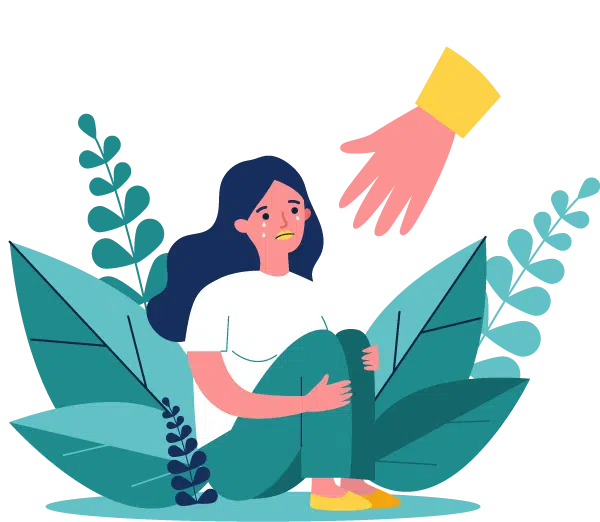

One of the many psychological battles a person may face is the struggle to control situations, and how this can become intertwined with over-caring for others. Someone may feel safer when they have a say in most things around them, for example in matters that involve other people, and they may feel more worthy when they believe they can control, influence, and "help" in other people’s lives. A common thought behind a controlling style of behavior could be: "If I do it for them, I will help them and they will not have to do it. So I kept it under control, and I will be important, both to them and to myself." But how helpful is this for the person who does it, and for the person receiving this kind of "care"? And how much of it is truly care?
If we imagine someone who interacts with others in a way that constantly tries to be important by helping, we can see how exhausting this would be. In their effort to "take care" of those around them, they may forget to take care of themselves, because they do not respect their own limits and needs. Even if they manage to carry the cost of the emotional fatigue that comes with taking on other people’s responsibility, and even if they succeed in helping everyone, how much would they truly help them in the long run? Let’s take a simple example. A child comes home from school and has to solve some math exercises. If the child struggles, the mother can solve them for the child, but then the child will not learn how to solve the problem, and will not learn the math. In a similar way in life, when we take on someone else’s responsibility in an attempt to make things easier for them, we may end up making things harder for them later. What would a person be like if they grew up believing that others should manage their situations for them? So there may be other ways to support someone that are more productive, and also less draining
In the example with the child and the math exercise, it would not be helpful for the mother to solve it for the child. But if she sits beside the child and explains how they can solve it on their own, and maybe shows the method by looking at the notes together, giving the child time to think, that would be far more helpful. After that, the child can repeat the same process, because both as children and as adults, one of the easiest ways to learn is through imitation. In the same way in life, it is often more productive to remind the person next to us that they can do it, to show genuine trust that they can, and to stay by their side in a supportive way, not an overprotective one. No matter how difficult a situation may feel, a person can find the coping tools to handle it, even if they struggle while discovering them.
However, to offer that kind of quality support, a person first needs to learn how to care for themselves. They need to know that we all have to search for our own strength, identify our personal ways of handling situations, and learn our limits. Because everyone has different ways of coping, each person has to explore this on their own first, and then ask for help. In other words, they take responsibility for themselves, so that any help they later ask for can be offered as support, and that support can be enough. This approach creates the space that both the person and the one next to them need, and it becomes easier to be supportive by simply saying, "I’m here for you, I believe you can do it." That is one of the best forms of help someone can offer, and it does not carry the weight of another person’s responsibility.
To give the other person the space they need to grow, we also need to know our own value, and not define it by how necessary we are to someone else. We can aim to build relationships where both people are strong enough to take responsibility for themselves, so they do not fall into a dependent dynamic where only one person carries everything. Relationships become healthier when both sides can stand on their own and carry their own responsibility, because then both sides are equal, and both can support each other when needed without collapsing under extra weight.
In short, care needs to start with ourselves, so that we can then offer it to others. People learn easily through imitation, and if we set an example of how we can care for ourselves, that alone is a form of help. It shows others how they can do it too, using one of the most effective ways of learning, imitation. If we take responsibility for caring for ourselves, we understand how important that process is, and we can also help others try it, not by doing it for them, but by supporting them. That is far more valuable than acting in their place, because it gives them the chance to develop the skills to face situations on their own and become stronger, instead of receiving only temporary relief. In this way, we help others grow, we keep ourselves lighter, and our relationship becomes healthier and more balanced.
By Erasmus Moro Smyrnaki, psychologist | 17/05/2021
Related articles