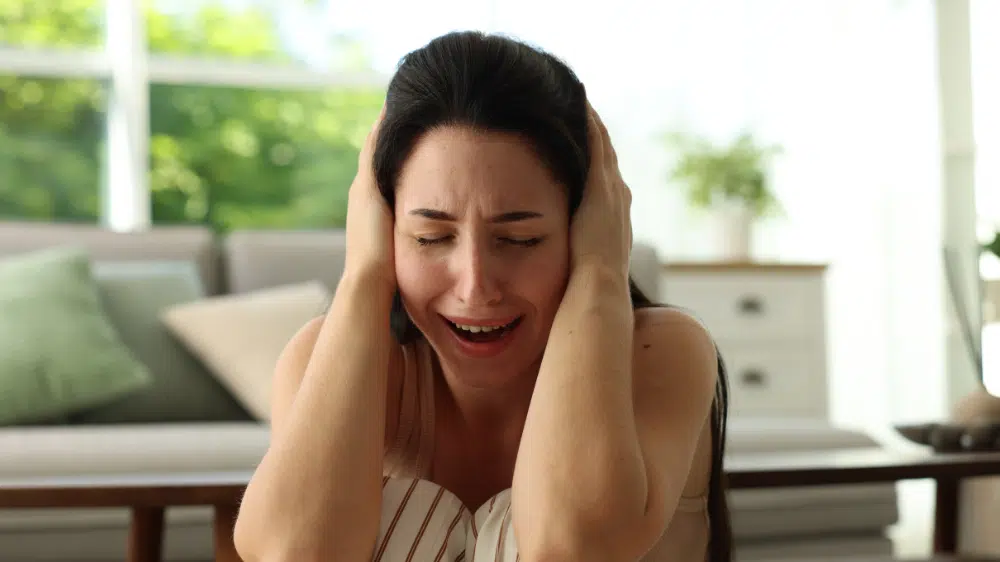
Have you ever felt a sudden wave of panic, where your heart pounds, your hands sweat, and your breathing “gets stuck,” making you believe you’re running out of oxygen? The feeling that you’re losing control or that something bad is about to happen can be terrifying. This sudden, uncontrollable visitor is called a panic attack. Panic attacks are sudden episodes of intense fear or discomfort, and they can happen to anyone, regardless of age or gender.
What are panic attacks?
Panic attacks are sudden, intense episodes of fear or anxiety that appear unexpectedly and peak within a few minutes. They are often accompanied by physical and psychological symptoms that can feel threatening, but rarely pose a danger to life.
Symptoms of panic attacks
Common symptoms include:
- Rapid heartbeat or palpitations.
- Shortness of breath or a choking sensation.
- Sweating, chills, or a burning sensation.
- Dizziness or unsteadiness.
- Trembling or a feeling of loss of control.
- Fear of death or imminent catastrophe.
- Derealization, a sense that things around you are not real.
Symptoms appear suddenly, peak within 5 to 10 minutes, and usually ease within 20 to 30 minutes. How long does a panic attack last?
How long does a panic attack last?
In most cases, a panic attack peaks within 5 to 10 minutes and subsides within 20 to 30 minutes. Even though the symptoms feel intense and unpleasant, they are temporary and not life-threatening.
An acute panic attack is marked by a sudden onset of intense fear and physical distress. While the intensity can be high, no one dies from a panic attack.
Why do we have panic attacks?
Panic attacks are caused by a combination of biological, psychological, and environmental factors:
- Genetic vulnerability, a family history of anxiety disorders.
- Heightened stress sensitivity, where the nervous system overreacts to stressful situations.
- Past trauma, traumatic experiences in childhood or adulthood.
- Co-occurring conditions, Anxiety, Depression or other mental difficulties.
A panic attack can appear suddenly without an obvious trigger, which can intensify fear and uncertainty.
Thoughts that often accompany panic attacks
During an attack, many people experience catastrophic thoughts such as:
- «I'm going to die!»
- “I’m losing control of my mind and body.”
- “I can’t handle this.”
Panic attacks do not have to limit you. With the right support and treatment, you can live with freedom, confidence, and safety.
Build a life without fear! Panic attacks don't have to limit you. With the right support and treatment, you can live with freedom, confidence and security.
How to cope with panic attacks without medication
There are effective ways to manage a panic attack without medication:
- Diaphragmatic breathing: Take deep, slow breaths through the nose and focus on the diaphragm rather than the upper chest to reduce hyperventilation.
- Acceptance: Remind yourself that the attack is temporary and not a real threat.
- Step away from stressors: If possible, move to a quieter environment.
- Mindfulness techniques: Notice the symptoms without resisting them, which can reduce intensity.
- Physical movement: Walking or gentle exercise can help the body discharge tension and return to baseline.
What is hyperventilation?
Ο Hyperventilation is closely linked to panic attacks and often works as both a cause and a result of panic episodes. Hyperventilation is when breathing becomes rapid and shallow, often more than 12 breaths per minute, causing carbon dioxide levels in the blood to drop. This can leave you with plenty of oxygen but a false sensation that you don’t have enough air. Hyperventilation can cause:
- Dizziness or unsteadiness.
- Numbness in hands or feet.
- A faint feeling.
- A choking sensation or breathlessness.
During panic attacks, hyperventilation can intensify symptoms and create a vicious cycle: the more anxious someone feels, the faster they breathe, which escalates anxiety and the attack.
Often, panic attacks start with physical sensations that are misinterpreted as dangerous, such as a strong heartbeat or difficulty breathing. This reaction can trigger hyperventilation, which:
- Increases fear and distress.
- Creates muscle tension and trembling.
- Makes concentration and calm harder.
In other words, hyperventilation feeds anxiety and makes the attack more intense and uncomfortable.

Ways to manage hyperventilation during a panic attack
- Controlled breathing: Inhale for 4 seconds, hold for 2, exhale for 6 to 8 seconds.
- Belly breathing: Bring attention to the chest and abdomen so breathing slows down.
- Paper bag breathing(temporarily): This is an older approach and must be used with caution. Breathing into a paper bag may increase carbon dioxide for a short period and help regulate hyperventilation.
- Cognitive defusion: Remind yourself that symptoms are temporary and the attack is not dangerous.
With guidance from a professional, you can learn practical ways to break the hyperventilation cycle and regain calm, even during an attack.
Personal story, my first panic attack
“I was on the metro, like every morning, on my way to work. Suddenly my heart started pounding like crazy. I began taking quick breaths, as if there wasn’t enough air. My hands went numb, my head spun, and I was sure I was going to faint. For a moment, I thought I was having a heart attack. I tried to breathe deeper, but the harder I tried, the worse it got. I felt trapped. Hyperventilation made my body shake from the inside, and my thoughts became more catastrophic: ‘I’m going to die here, in front of everyone.’ Luckily, a passenger looked at me and said calmly, ‘Slow breaths, with me.’ I started following his rhythm, inhale, hold, exhale. Little by little, the symptoms eased. The attack lasted about ten minutes, but it felt like eternity. Later, I learned that what I had was an acute panic attack with hyperventilation. And most importantly, I understood that as terrifying as it feels, you don’t die from a panic attack. It’s your body overreacting to fear. Since then, I started learning breathing techniques and working with a psychologist so panic wouldn’t take over.”
Preventive steps for panic attacks
Prevention is just as important as managing acute episodes:
- Stress management: Daily relaxation techniques.
- Gradual exposure to fears: Returning to situations you avoid because of anxiety, with structured desensitization.
- Healthy habits: Sleep,nutrition, physical activity, social support.
- Psychotherapy: Early support reduces the frequency of attacks and the fear around them.
Has anyone died from a panic attack?
Panic attacks are not fatal. They can be exhausting and frightening, but they are temporary and resolve on their own. No, no one has ever died from a panic attack.
A panic attack can feel like something serious is happening, such as a heart attack, because the body activates the fight or flight response, leading to:
- Rapid heartbeat or strong palpitations
- Shortness of breath or hyperventilation
- Dizziness, shaking, a near-fainting sensation
- Intense fear that something terrible will happen
But these symptoms are normal bodily responses to anxiety and do not lead to death.

Why do we think we will die during a panic attack?
- The intensity of physical symptoms resembles those of a cardiac event.
- The panicked brain cannot distinguish between real and imagined danger.
- Lack of information strengthens fear.
In reality, the body does not collapse from the attack. It is simply operating at an exaggerated level due to anxiety.
Treatment for panic attacks, how to regain control
Panic attacks can feel overpowering, but there are effective ways to treat them. Treatment is multi-layered and always tailored to the individual.
1. Psychotherapy
Psychotherapy is the first-line treatment for panic attacks.
Cognitive Behavioral Therapy (CBT)
- Considered the most effective approach.
- Helps a person recognize negative thoughts that fuel panic.
- This approach includes exposure exercises, involvinggradual exposure to feared situations, with the goal of reducing fear intensity.
- Provides self-help tools that reduce attacks over time.
EMDR (Eye Movement Desensitization and Reprocessing) therapy
- Useful when panic attacks are linked to traumatic experiences.
- Through guided eye movements, it helps the brain process trauma and reduce its emotional charge.
Acceptance and Commitment Therapy (ACT)
- Focuses on learning to live with anxiety rather than eliminating it completely.
- Helps a person live a fuller life even when symptoms are present.
2. Medication
In some cases, a psychiatrist may recommend medication, especially when attacks are frequent and disabling.
- Antidepressants such as SSRIs and SNRIs can stabilize mood and reduce attack frequency.
- Benzodiazepines can act quickly but are usually prescribed short term due to dependence risk.
- Beta blockers can reduce physical symptoms such as rapid heart rate and tremor.
Medication does not treat the root cause, but the symptoms. Most effective care often combines medication and psychotherapy.
3. Self-help techniques and daily care
Managing panic is supported by lifestyle practices:
- Diaphragmatic breathing to regulate hyperventilation
- Mindfulness and meditation to reduce overall tension
- Physical exercise to discharge adrenaline and reduce anxiety
- Good sleep and nutrition to stabilize the nervous system
- Journaling to identify patterns and triggers
4. The role of education
Many people fear they are having a heart attack or will die during an attack. Learning that a panic attack, however unpleasant, is not life-threatening can itself be deeply therapeutic.
5. Support from the social environment
- Open communication with friends, family, or support groups reduces isolation.
- Participating in psychoeducation groups helps you realize you are not alone.
Don’t let fear shape your daily life. On our platform you can find specialized psychologists who can help you manage anxiety and panic attacks.
Conclusion
Panic attacks are one of the most intense expressions of anxiety and can feel paralyzing, with the fear that something catastrophic is about to happen. Despite the intense panic and physical symptoms, these attacks do not signal the end of life. However, fear of recurrence is common and can significantly affect daily life, relationships, and quality of life if not addressed. Understanding their nature, early assessment, and appropriate treatment, whether through psychotherapy such as CBT, EMDR, and mindfulness-based approaches, or in some cases medication, can reduce the frequency and intensity of attacks. Panic attacks do not define who we are, and they do not have the power to destroy us. With tools, support, and understanding, we can overcome them and build a life with more freedom and calm.
Bibliography
- Stefanis, K., and Mavreas, V. (2017). Psychiatry. Athens: Paschalidis.
- Koutsogiannis, G. (2020). Anxiety Disorders: Theory and Clinical Practice. Athens: VHTA Medical Publications.
- Vlassopoulou, M. (2018). Cognitive Behavioral Therapy: A Manual for Clinical Practice. Pedio Publications.
- American Psychiatric Association. (2013). Diagnostic and Statistical Manual of Mental Disorders (5th ed.). Arlington, VA: American Psychiatric Publishing.
- Craske, M. G., and Barlow, D. H. (2007). Mastery of Your Anxiety and Panic: Therapist Guide. Oxford University Press.
- Clark, D. M., and Beck, A. T. (2011). Cognitive Therapy of Anxiety Disorders: Science and Practice. Guilford Press.
- Hofmann, S. G., Smits, J. A. (2008). Cognitive-behavioral therapy for adult anxiety disorders: A meta-analysis of randomized placebo-controlled trials. Journal of Clinical Psychiatry, 69(4), 621-632.
Related articles