

Who is responsible for my depression?
It’s natural to look for causes when a mental illness makes daily life, decisions, emotions, and behaviors so difficult. It’s natural to try to figure out who is to blame for a mental health condition that brings sadness and grief, anger, guilt, indignation, and constant exhaustion.

So, who is to blame?
- Is it my fault that I don’t make the right decisions for my life?
- Is it my fault that I don’t take care of myself as I should?
- Is it my parents’ fault?
- Is it my grandparents’ fault ?
- Is it my friends’ fault?
- Is it my school’s fault?
- Is it my environment’s fault?
Don’t search on your own. Ask for help from our licensed therapists.
Developing a Depressive Disorder usually involves a combination of factors that increase a person’s vulnerability and risk of experiencing the condition.
To begin with, genetic factors play an important role. According to research, depressive disorders are more likely to appear in twins and first-degree relatives, meaning parents, siblings, and children. Evidence suggests that certain genes influence serotonin production and transmission in the brain, which may increase the risk of depression. This means that a vulnerability to this mental illness can be inherited, and it may be expressed if other contributing factors are also present.
Of course, we also have to consider each person’s personality and temperament, which significantly shape their psychological experience. It seems that people who naturally have low self-confidence and self-esteem, who experience excessive anxiety, who are characterized by negative thinking, and who tend to interpret events in their lives in a distrustful or pessimistic way, have a higher likelihood of developing depression. Biological factors also influence depressive symptoms when levels of certain mood-regulating brain chemicals are low.
We also cannot ignore social and cultural factors, everyday circumstances, and the broader environment around us. It makes sense that if you are dealing with difficult situations, major financial problems, anxiety, a breakup, or the death of a loved one, you may have a higher risk of developing depression compared to the general population. The same applies to people who are isolated or belong to minority groups, and to those who have no support and feel alone. Stereotypes, discrimination, and social pressure can also negatively affect mental health and intensify depressive symptoms.
In any case, for someone to develop a Depressive Disorder, it typically involves:
- Experiencing intense stressors and negatively charged social and psychological circumstances.
- Certain processes being activated in the brain.
- Genetic factors that can make the person more sensitive and vulnerable to the events above.
What are Depressive Disorders?
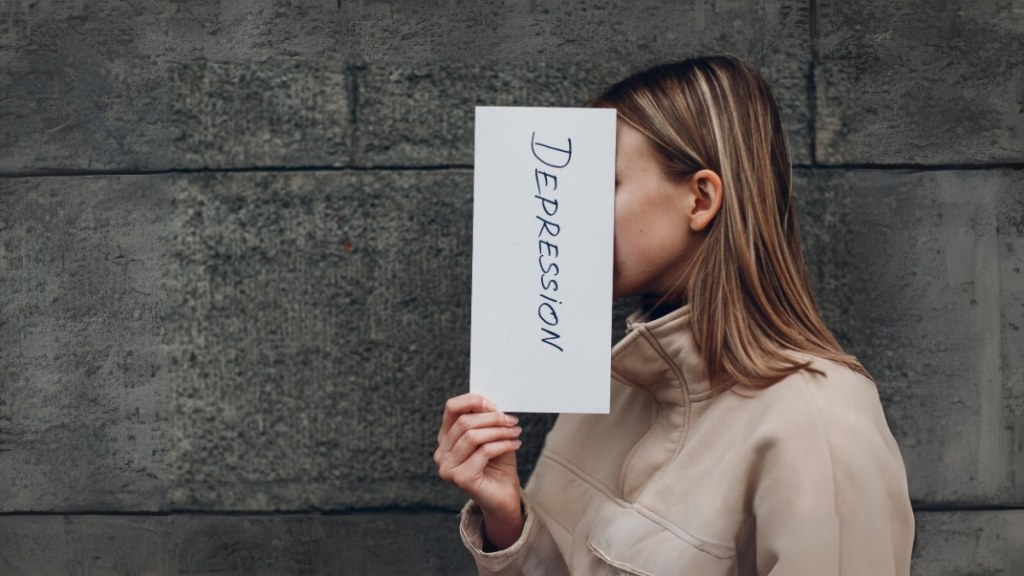
What many people don’t realize is that “Depressive Disorder” is not just one condition. There are many forms, and they differ depending on the type, quality, frequency, intensity, gender, age, and the symptoms a person experiences.
If you feel you are experiencing some of these symptoms, reach out today to one of our licensed therapists.
One of the most common forms is Major Depressive Disorder, which lasts at least two weeks and involves a significantly low mood and/or a loss of interest and pleasure for most hours of the day. It is characterized by sadness and despair, fatigue, reduced concentration and attention, weight loss or gain, insomnia or an excessive desire to sleep, thoughts of death, and more. Research suggests that, on average, the first depressive episode occurs between the ages of 25 and 29, and it is slightly more common in women.
Another well-known form is Persistent Depressive Disorder, also known as Dysthymia. For this diagnosis, symptoms must last at least two years, with generally milder symptoms than Major Depressive Disorder, but with a longer duration over time. Fatigue and exhaustion can be prominent, as well as low self-esteem and negative thoughts about the self, others, and the future. More broadly, there is reduced concentration, difficulty making even simple decisions, and a sense of hopelessness.
Perinatal or Postpartum Depression is also very common and concerns women exclusively. As the name suggests, it refers to depression that appears during pregnancy or after childbirth. Symptoms include intense sadness, fatigue and exhaustion, indifference, anxiety and guilt, and changes in sleep and appetite. Women may experience intense anxiety about caring for their baby, or alternatively, a lack of interest and feelings of being a “bad mother.” These emotions can intensify guilt and shame, making postpartum depression even more distressing for both the mother and her child.
If you are experiencing any of the symptoms above, if you have negative thoughts about yourself or your child, or if you struggle with daily baby care due to intense exhaustion, contact one of our specialised therapists.
There are also other Depressive Disorders that may not be as well known or as common, but they still affect part of the population. In order to receive a diagnosis of depression, specific criteria and symptoms defined by the American Psychiatric Association must be met, and diagnosis is made only with the help of a psychiatrist.
Bibliography
- American Psychiatric Association (2016). depressive disorders. in Diagnostic and statistical manual of mental disorders (5th ed., text rev.)
- Howard, L. M., & Khalifeh, H. (2020). perinatal mental health: a review of progress and challenges. world psychiatry, 19(3), 313-327. doi:10.1002/wps.20769.
- Hyde, J. S., & Mezulis, A. H. (2020). gender differences in depression. harvard review of psychiatry, 28(1), 4-13. doi:10.1097/hrp.0000000000000230
- Khalsa, S.-R., McCarthy, K. S., Sharpless, B. A., Barrett, M. S., & Barber, J. P. (2011). beliefs about the causes of depression and treatment preferences. journal of clinical psychology, 67(6), 539-549. doi:10.1002/jclp.20785.
- Neitzke, A. B. (2015) An Illness of Power: Gender and the Social Causes of Depression. culture, medicine, and psychiatry, 40(1), 59-73. doi:10.1007/s11013-015-9466-3.
- Nobis, A., Zalewski, D., & Waszkiewicz, N. (2020). peripheral markers of depression. journal of clinical medicine, 9(12), 3793. doi:10.3390/jcm9123793. doi:10.3390/jcm9123793
Related articles