
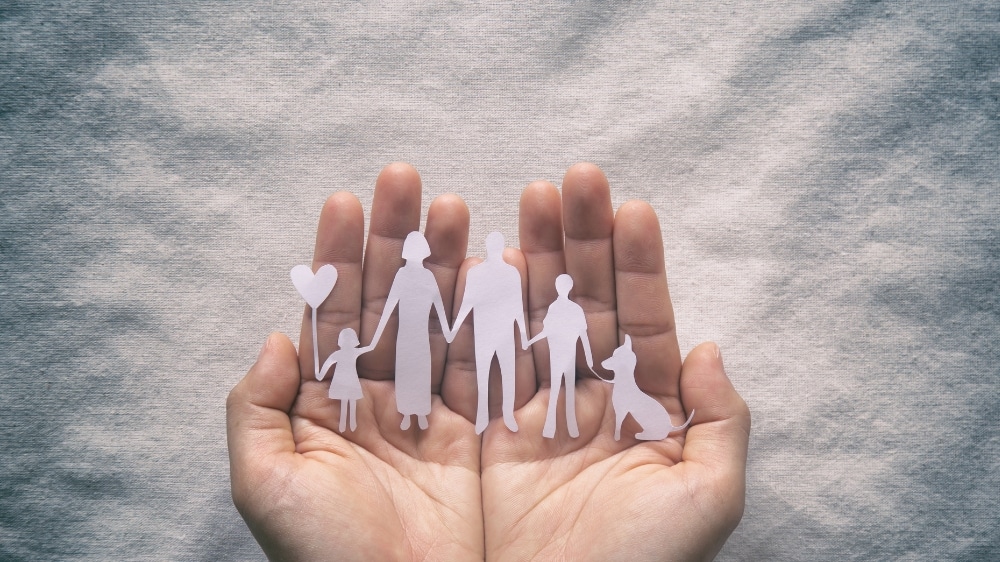
Ιn the systemic approach, a family, the basic human social system, is not simply a group of people who interact with one another. It is a whole complex with its own structure, rules and goals, where the interactions between its members play a primary role.
It is therefore reasonable that understanding the behavior of one family member independently of the behavior of the other members is both pointless and impossible. The focus and goal of the therapeutic intervention is no longer the individual alone, but the system of relationships to which the person belongs.
According to Duvall and Hill, over the course of its life cycle the family passes through eight developmental stages. It begins with the married couple, followed by the family with their first child. The children move into school age, followed by adolescence and then adulthood. As the children become independent, the parents once again turn their attention toward one another. Eventually, the family moves toward accepting later life.
Within each stage, the family needs to achieve certain developmental tasks. To accomplish this, the relationship system within the family expands, changes, and realigns. This requires sufficient flexibility, a sense of security, and communication.
The family can be the main source of support, security, and love; however, it can sometimes also be a source of pain, distress, and misunderstanding.
Families who are derailed from their life cycle need help to get back on track and find their evolutionary momentum.
Symptoms in a family member may reflect the stress resulting from such a situation.
Symptoms are a call for therapy and change.
Diagnosis is made after observing the family’s patterns of interaction. It includes the visible organization and functioning of the family, as well as the less visible side of possible transactions. This refers to myths, “rules,” and beliefs that come from the family’s history - beliefs that, when applied in the present, are no longer functional and prevent the family from operating according to its current needs.
Individual problems gain meaning and a reason for existing only within the family’s relational context. Therefore, if family interactions change, the meaning of these problems changes as well, and families can mobilize their strengths to address the difficulties of their members (or vice versa). The family - like any system, due to its fundamental properties, can work toward its own improvement and healing.
Through the strengthening of family relationships, growth, and differentiation, family members are able to construct stories about themselves and their family that are more functional and flexible - stories characterized by truth, courage, freedom, and personal meaning.
“The family is the only place in the whole world where we all expect guidance and care: healing of psychological wounds, an increase in self-esteem, and support for everyday life. Everyone knows that in the family we learn affection and maturity. For these goals to be achieved and for the family to become truly vital, continuous observation, change, and restructuring are essential. This can happen only within an open system (the family).”
Written by psychologist Elena Bohoropoulou | 07/05/2020
Related articles