When we talk about anxiety, we are talking about an automatic, biologically programmed response of our body to situations that feel "threatening". Just as our heart beats and performs a vital function, anxiety is activated with the aim of protecting us from something "dangerous" to us, from something threatening. In the past, a threat for humans could be a wild animal, and if someone was not prepared in time and in the right way to face it, they might not survive. Anxiety is completely normal, we all feel anxious, each of us for our own reasons, which today involve different kinds of "dangers" and often more hidden forms of "threat" (for example work, personal relationships, phobias, psychologically stressful events).
However, either due to a temperamental sensitivity to anxiety or because of periods and circumstances that place us under significant pressure, anxiety can feel excessive and overwhelming. Many times, it weighs us down and prevents us from functioning satisfactorily in various areas of life. A range of conditions, known as anxiety disorders, may emerge as a signal that support is needed. One such disorder is panic disorder, which involves unexpected and recurrent panic attacks and is characterized by an intense fear of the attacks themselves and of their impact on a person’s life.
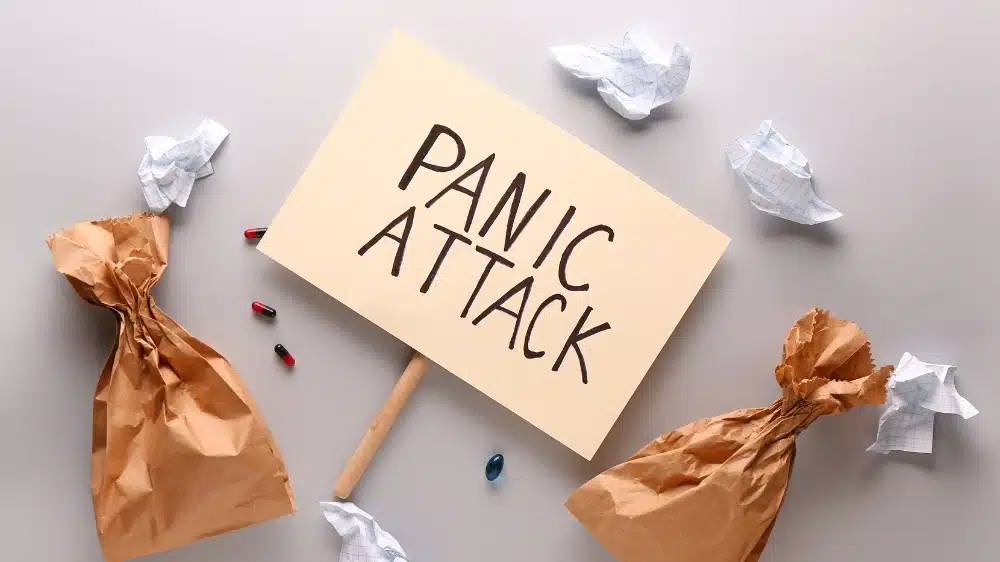
A panic attack can occur once, or on a recurring basis (panic disorder). It does not discriminate, and it can happen to any of us at some point in our lives. A key feature of a panic attack is the feeling of the unexpected, the suddenness. Precisely because it occurs so abruptly, the person often does not understand what has caused such an intense physical reaction. For this reason, when it happens for the first time, people frequently seek medical help or go to a hospital, believing that what they are experiencing is physical and potentially very serious(for example, a stroke or even death). Of course, it is important to emphasize that before identifying a panic attack, medical examinations should first rule out any physical causes.
A panic attack may present with some of the following symptoms:
- Intense rapid heartbeat
- Sweating
- Trembling, or intense fear
- Shortness of breath, or tightness in the chest
- Intense chest pain that resembles angina
- Feeling of choking
- Nausea, or gastrointestinal discomfort
- Chills, or sudden sensations of heat
- Feeling dizzy, unsteady, or faint
- Numbness in the limbs
- Feeling detached from yourself, or feeling that the environment is unreal
- Terror that you will lose control, or that you are "going crazy"
- Fear that you will die
These symptoms, and their intensity, terrify the person and can create strong fear and shame about an upcoming attack. In this way, the person enters the vicious cycle that maintains panic. According to the cognitive behavioral model of panic disorder, a trigger (subjectively threatening for the person) increases physical arousal and adrenaline in the body, which in turn causes the physical reactions of panic. These reactions are interpreted catastrophically by the person, leading to hypervigilance about bodily sensations, and this ultimately intensifies the already existing arousal and worry, confirming the feeling that "something is wrong".
It is important to clarify that the fear mechanism and the symptoms of panic are there to protect us, but because the energy is not channeled in a functional way, we end up in a panic attack. Specifically, blood and oxygen are directed to the muscles so the person can be ready for immediate action, muscle tone increases (trembling), the lungs open to take in more oxygen (a sensation of suffocation, shortness of breath, difficulty breathing), the heart overworks to send blood and oxygen more quickly (rapid heartbeat). However, hyperventilation, which is created as the person breathes, increases the intensity of symptoms.
Between the physical symptoms and the escalation of panic, there is a crucial cognitive interpretation. How do I interpret what is happening to me? People who experience panic attacks usually feel fragile and vulnerable, they feel that the escalation will be dangerous, and they feel unable to control the outcome. Their automatic thoughts at that moment are catastrophic ("I will go crazy", "I will faint", "I am losing control"). These interpretations are not helpful at that time, on the contrary, they intensify worry, and contribute to the escalation of the panic attack. In addition, fear of a future attack can lead to anticipatory anxiety. Individuals often engage in behaviors aimed at preventing the feared outcome and avoid situations they associate with a possible panic attack. For this reason, many people with panic disorder also develop agoraphobia (general avoidance of situations that could trigger panic, such as open or closed spaces, physical exercise, traveling alone, and so on).
What can I do to cope more effectively with panic attacks?
At first, the most important thing is, to remember that anxiety is normal, and it is ok to feel anxious. Anxiety shows that I am alert. It may be the right reaction, just at the wrong time. If you change the way you think about anxiety, you can also change the way you respond to it.
I stay where I am, I try to remain, I find a calmer place if possible, until the attack passes.
I try to relax as much as I can, and to shift my attention away from the symptoms. I think of a place or a situation that calms me. Once I have that image in my mind, I try to focus on it as much as possible. This can help reduce the intensity and escalation of symptoms. Guided imagery is a technique that requires practice, but gradually it can become a very important tool.
I try to breathe slowly and steadily, allowing my belly to expand, counting to four on each inhale and exhale in a consistent rhythm. Deep breathing helps the body return to a calmer state more quickly. Practicing proper breathing regularly is essential for managing panic and anxiety.
I reinterpret the thoughts I have at that moment, and I try to form more helpful thoughts:
I remind myself: I’ve been through this before. My anxiety is not something physically dangerous - I’ve checked, nothing bad happened, and nothing bad will happen now. I understand what is happening: anxiety comes, escalates, and eventually passes. I will not go crazy, and I will not lose control. The physical sensations I feel are uncomfortable but not harmful. Others cannot see how I feel, and there is no reason to feel ashamed of my experience.
I practice accepting my anxiety, myself, and my strengths, and I acknowledge that it is unrealistic to control everything all the time. It is okay to feel what I feel, even if my body reacts in ways I cannot immediately control.
I work to identify the underlying causes of my anxiety, listening to my body and reflecting on the factors that trigger panic. Often, the “danger” that sets off panic is subjective and unconscious, which is why attacks can feel sudden. Through psychotherapy, I confront fears and difficult emotions I may have been avoiding, which can reduce the intensity and frequency of panic attacks over time.
I cultivate self-compassion. Thoughts like “here we go again” only increase distress and create an internal struggle with my panic. Expecting to have complete control over my body or to stop an attack instantly is unrealistic and unhelpful.
I communicate with people close to me about my panic attacks. I explain how I feel and what I need when an attack occurs so they can support me rather than unintentionally make the situation worse.
By Lilianna Maragkou, psychologist | 05/11/2020 05/11/2020
Related articles